
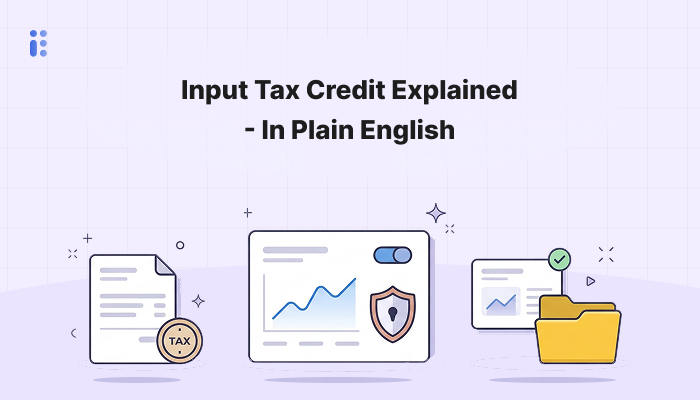
If you’ve ever heard your accountant mention “ITC” or “Input Tax Credit” and nodded along politely, you’re not alone. It’s one of those terms that every Indian business owner knows about, but few actually understand completely.
Yet, understanding ITC can save your business a lot of money - every single month.
Let’s break it down in plain English, without the legal jargon, and see how you can make the most of it (without spreadsheets or confusion).
When you buy goods or services for your business, you pay GST on them - right?
Now, when you sell your own products or services, you charge GST to your customers.
Here’s where ITC comes in:
The GST you paid on purchases can be adjusted against the GST you collect from your customers.
So, instead of paying the full GST amount to the government, you pay only the difference.
Example:
Let’s say you bought raw materials worth ₹1,00,000 and paid ₹18,000 as GST.
You then sell your product for ₹2,00,000 and collect ₹36,000 GST from your customers.
Now, you don’t need to pay ₹36,000 to the government.
You can deduct the ₹18,000 you already paid and pay only ₹18,000 as your net GST.
That ₹18,000 deduction? That’s your Input Tax Credit.
You can claim ITC only if:
If any of these are missing, your ITC claim can get rejected or delayed.
This is where many small businesses slip up - missing invoices, non-compliant vendors, or wrong GSTIN entries.
Not all purchases qualify for ITC. The GST laws are clear about certain exclusions.
Here are a few common ones:
So even if you paid GST on these, you can’t claim it back.
Tracking ITC sounds simple on paper - but in reality, it’s messy.
Different invoices, vendors who delay filing, missed GSTINs, mismatched entries… one small error and your claim can get blocked.
Excel can’t validate invoices automatically or match your purchases with your supplier’s filings. You’ll still have to cross-check everything manually or through your CA - and that’s time you shouldn’t have to waste.
With Billite, you don’t need to worry about missing out on ITC ever again.
Here’s how it helps:
So when it’s time to claim your ITC, you or your accountant have everything neatly in one place - no chasing invoices, no manual cross-checks.
Input Tax Credit isn’t as complicated as it sounds. It’s simply your right to reclaim the GST you’ve already paid — provided your records are clean and compliant.
In 2025, the easiest way to stay ITC-ready is not by double-checking spreadsheets — but by using a reliable accounting tool built for Indian businesses.
With Billite, you can automate invoicing, track GST effortlessly, and never miss an ITC opportunity again.
Try Billite today — and keep every rupee of tax credit you deserve.
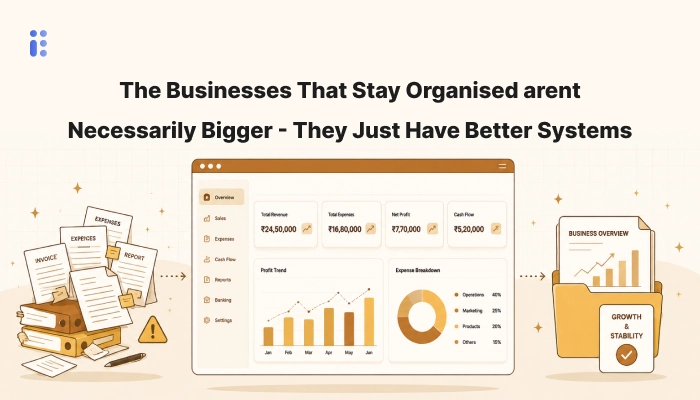
Discover how accounting software helps businesses improve cash flow, reduce errors, simplify GST compliance, and scale e...
Read More