
Been using Billite for nearly a year now and it's been a great experience. Extremely easy-to-use and user-friendly! Helped us save dozens of work hours every week generating and tracking invoices.
Track time spent on client work, understand effort across projects, and make billing more accurate without relying on scattered timesheets.
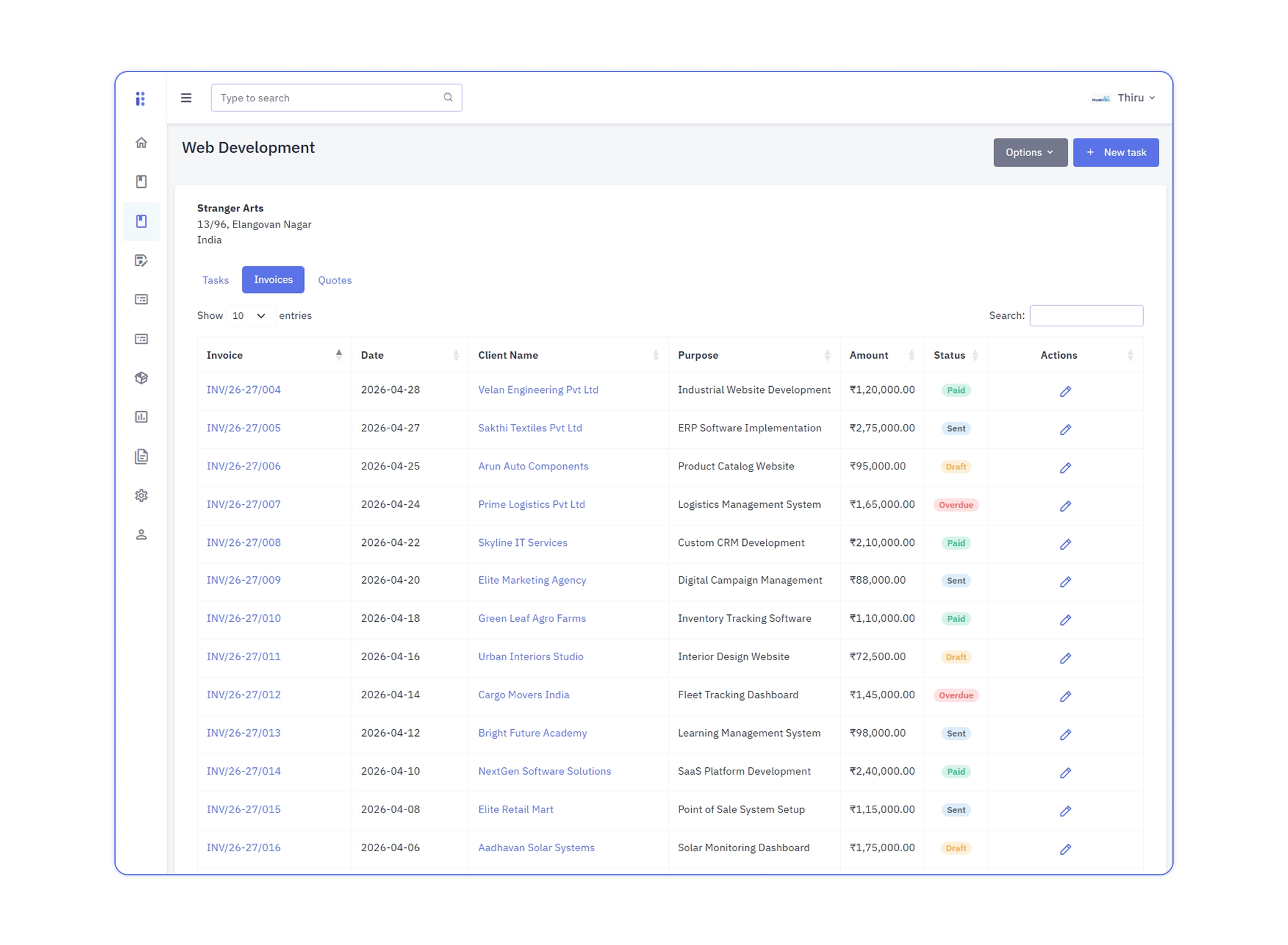
Billite helps teams record work hours in a structured way so effort, project progress, and billing visibility stay connected.

Log hours against projects, tasks, or client assignments so effort is attached to the right delivery context.

See where time is being spent across clients, projects, and contributors without manual spreadsheet rollups.

Understand which hours contribute directly to revenue and which hours support internal execution.

Turn tracked effort into cleaner billing support for hourly projects, retainers, and project reviews.
Time tracking works best when it is tied to client work, project progress, and revenue visibility. Billite brings those parts together.
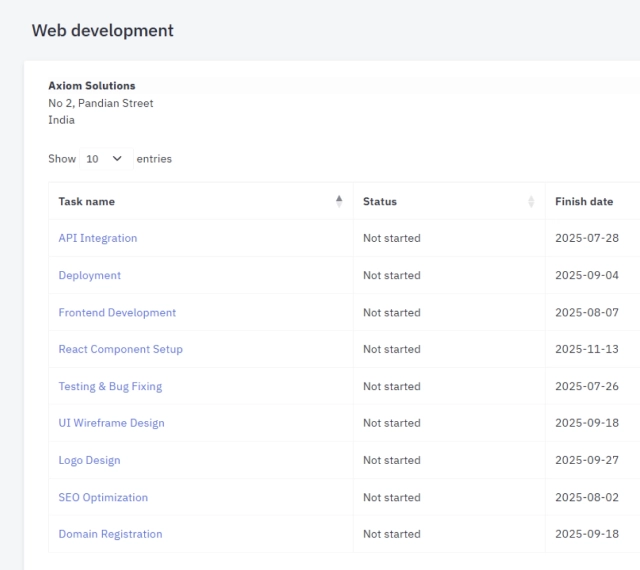
Record effort across client projects without losing context around tasks, deadlines, or deliverables.
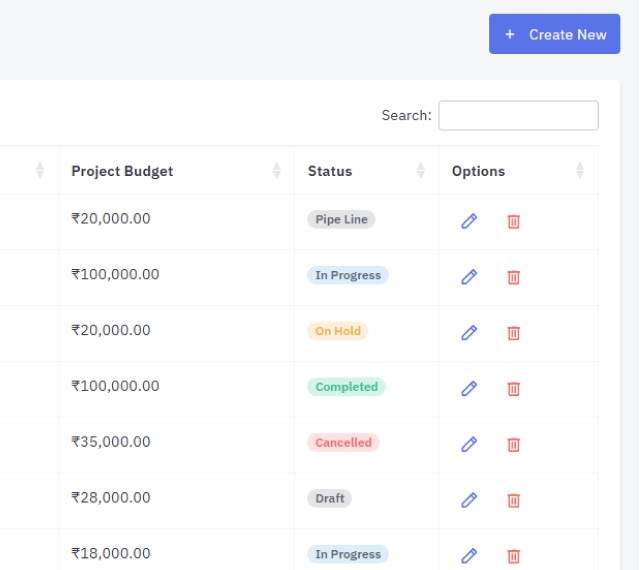
Use tracked time to support project billing decisions and reduce uncertainty around billable hours.
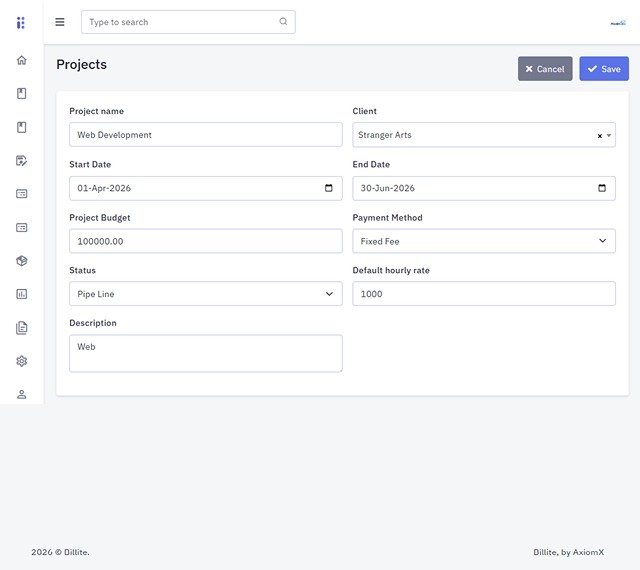
Spot where time is going so planning, staffing, and project reviews become easier.
When teams understand how much time goes into a project, it becomes easier to bill fairly, review profitability, and plan future work with more confidence.
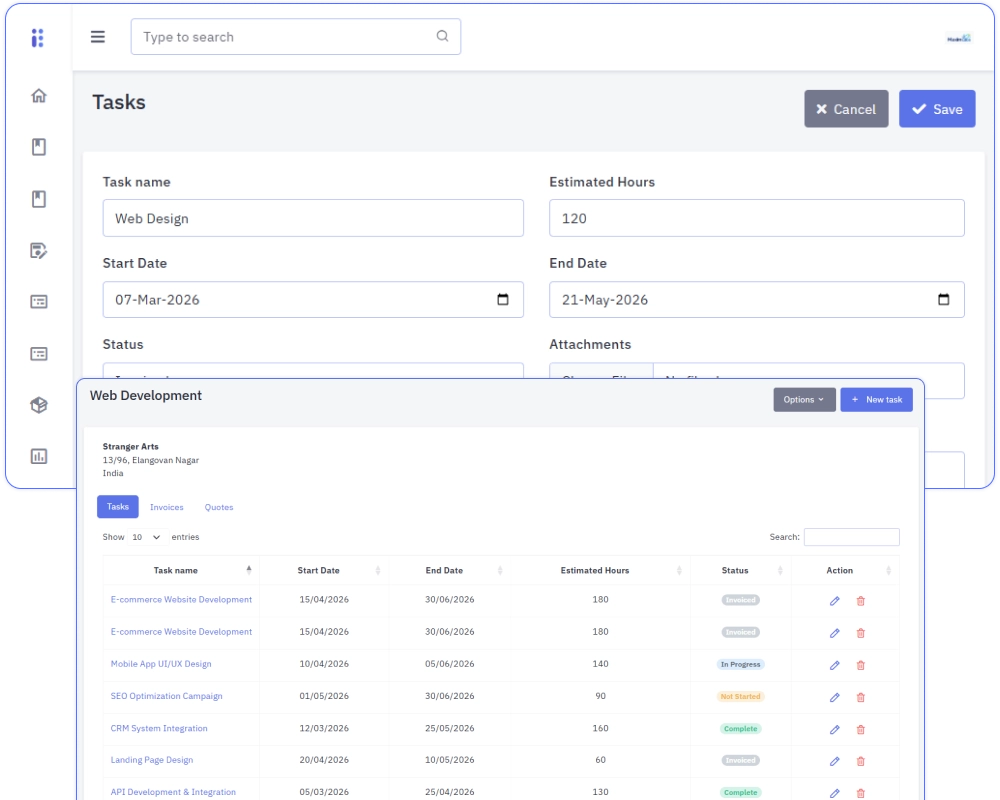
Time tracking is especially useful for teams that bill by effort, manage multiple client projects, or need stronger visibility into where delivery time is spent.

Track account, campaign, and project hours across teams so client billing and resourcing are easier to manage.

Log advisory, delivery, and support effort against client work without relying on disconnected timesheets.

Capture billable hours clearly so invoicing reflects real effort and client work stays organized.
Time tracking in Billite helps businesses record the hours spent on client work, projects, and tasks so effort is easier to review and connect to billing.
It is useful for agencies, consultants, freelancers, service teams, and any business that needs to measure effort across client projects.
Yes. Time tracking gives teams a clearer view of billable effort so invoices are easier to support with actual work records.
No. It is also useful for reviewing project effort, capacity, profitability, and delivery load even when billing is not strictly hourly.
Billite connects project work, time visibility, and billing workflows so tracked effort is more useful than isolated timesheet data.
Use Billite to capture billable time, review project effort, and keep work records tied to the projects that generate revenue.
Been using Billite for nearly a year now and it's been a great experience. Extremely easy-to-use and user-friendly! Helped us save dozens of work hours every week generating and tracking invoices.
2x faster
simplified
~10 hrs/week

Switching to Billite was one of the best decisions for our business! The invoicing process is now seamless, and tracking expenses has never been easier. We are thrilled with the support and features Billite offers. Highly recommended!
2x faster
simplified
~10 hrs/week

Billite has made our administrative tasks a breeze. The ability to automate payment reminders and manage everything on the go has significantly improved our efficiency. We are relieved to have found such a reliable solution!
2x faster
simplified
~10 hrs/week
Billite is actually simple to use. I'm a person without any accounting experience and I can use it. I'd definitely recommend using Billite for any business who want to have a hassle free invoicing tool
2x faster
simplified
~10 hrs/week
Time tracking helps businesses understand how much effort goes into client work. Without that visibility, it becomes harder to estimate correctly, review profitability, or explain billed work clearly.
For service teams, time tracking is not only about logging hours. It is about improving accountability, pricing confidence, and billing accuracy across real projects.
Time tracking is especially useful when multiple people contribute to client delivery or when work spans tasks, milestones, and timelines.
Billite helps teams keep project activity and time visibility connected. That means effort is easier to review in the context of client work instead of being trapped inside standalone timesheets.
The right time tracking software should do more than record hours. It should help teams use effort data to improve project control, billing support, and delivery visibility.
Billite is built to support that wider workflow for service businesses that need stronger connection between work done and revenue earned.
Choose Billite today and start your journey towards efficient invoicing and business management today.